
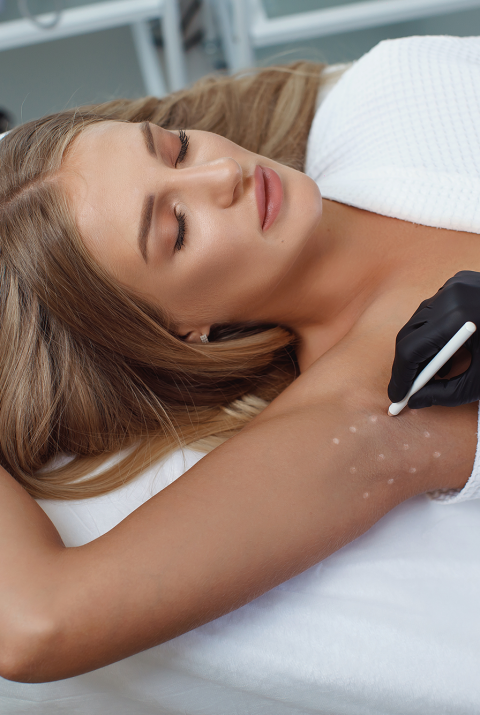
Hyperhidrosis — the official term for excessive sweating — can be upsetting, frustrating and (for many people) emtoionally humiliating. From the underarms, hands and feet to even the face, regular sweating can become an obstacle to everyday life and confidence. That’s why many of us seek treatment, and one of the most talked about treatments are Botox.
But is Botox really better than other treatments that work for hyperhidrosis? Here, in plain English and natural language is an easy-to-understand explanation to guide you in making an informed choice.
Mechanism of Action
How Botox Treats Underarm Hyperhidrosis
Botox functions by temporarily interrupting nerve signals that stimulate sweat glands. Once injected into the targeted source of sweating, usually in the underarms, it blocks signals that stimulate sweat production.
Most people start seeing improvement within a few days, and the full effect is typically evident in about two weeks. Results typically last 4-6 months (though some people find their results lasts longer).
Botox currently has FDA approval for axillary hyperhidrosis (underarm sweating) so it is one of the most effective clinical solutions available now.
Botox for Sweating Compared to Other Treatments
To determine if Botox is the superior approach, you need to compare it with other treatments typically employed.
Topical Antiperspirants (Prescription & OTC)
Lots of people begin with clinical-strength or prescription antiperspirants with aluminum chloride.
Pros
- Non-invasive
- Accessible and inexpensive
- Suggested for light to moderate sweating
Cons
- Often ineffective for severe hyperhidrosis
- Can cause skin irritation
- Needs regular, ongoing use
How Botox compares: Botox provides a better and more predictable reduction in sweating, especially if you’re not responding well anymore to antiperspirants.
Oral Medications
Anticholinergic pills like glycopyrrolate are sometimes used to treat sweating.
Pros
- May be aimed at sweating over the entire body
- Convenient to take
Cons
- Side effects like dry mouth, vision disturbances, constipation
- Not suitable for long-term use
How Botox compares: Botox does not induce systemic side effects and selectively acts on the site of injection, and thus is considered to be a good candidate for local treatment in hyperhidrosis.
Iontophoresis
It’s all about directing a gentle current of electricity through water to stop sweating on palms or tails.
Pros
- Good for palm, hand and plantar foot sweating
- Non-surgical
Cons
- Time-consuming (multiple weekly sessions)
- Maintenance treatments needed
- Not ideal for underarms
How Botox compares: Botox is faster and more convenient, but iontophoresis might be preferable to those who don’t like shots for hands and feet.
Laser or Energy-Based Treatments
More recent technologies such as microwave thermolysis (MiraDry is an example) target and destroy sweat glands.
Pros
- Long-lasting or permanent reduction
- Suitable for underarms
Cons
- High cost
- May cause swelling, numbness or nerve sensitivity
- Not suitable for all areas
How Botox compares: Although Botox is not permanent, it is less invasive and with fewer risks, and gives predictable results.
Surgical Options
For most severe cases ETS may be indicated.
Pros
- Permanent result
Cons
- Major surgery
- High risk of compensatory sweating
- Irreversible
How Botox compares: Botox is much safer and should be tried before any type of surgery.
Is Botox the Best Option?
The reason is that Botox has the perfect combination of potancy, saftey and convenience. It is particularly beneficial for:
- Underarm hyperhidrosis
- Individuals in whom topical antiperspirants have failed
- Those who want a nonsurgical solution that’s actually been proven to work
- People who desire quick and noticeable results
But Botox might not be the best option if:
- You want something that will last long-term
- You sweat excessively on palms or feet and want non-needle options
- Cost is also an issue, as Botox needs to be repeated.
How Long Do Results Last?
Nearly everyone has 4–6 months of significant decrease in sweating. With repeated treatments some people have seen continued improvement and others only need to come in twice yearly, because the sweat glands do not return.
Potential Botox for Hyperhidrosis side effects
Botox is safe, although some minor temporary side effects can occur:
- Slight swelling at injection sites
- Bruising
- Passing muscle weakness (least in hands)
These generally go away pretty of fast and don’t interfere with everyday activity.
Final Judgment: Is Botox a Better Solution Than Other Treatments?
Yes, most people prefer Botox for hyperhidrosis treatment as it:
- Fast and reliable results
- Minimal downtime
- Proven safety
- High success rates for underarms
- Selective relief that does not influence the remainder of the body
But the “best” treatment for you will depend on how much you sweat, your preference for invasiveness, area of treatment and long term goals. By discussing options with a professional aesthetic practitioner, or dermatologist you’re able to make the best informed decision on the right plan for you.